
When financial disputes escalate to litigation, courts often turn to banking expert witnesses to illuminate complex financial matters. These professionals help demystify banking practices, regulations, and transactions for judges and juries, many of whom have little experience with the intricacies of the financial industry. Securing a knowledgeable bank expert can prove more than helpful—it can be crucial for establishing the facts and nuances at the center of financial cases. Credible testimony from these witnesses often makes the difference between a convincing argument and a lost case, as judges and jurors heavily rely on such expertise to interpret evidence and determine liability or damages when the underlying issues are technical or obscure.
But what truly separates a persuasive expert from the rest? The answer lies in a blend of industry experience, objective analysis, and ethical conduct. Courts rely on these experts to clarify complex financial matters, ensuring that the testimony they deliver is not only accurate but also impartial and comprehensible. Their ability to communicate clearly and credibly is paramount, as their words may directly influence the court’s understanding of the facts, and ultimately its judgment. Selecting the right banking expert witness means choosing someone who is not just knowledgeable but can also bridge the gap between technical complexity and legal standards credibly.
Essential Qualifications and Experience
Courts are discerning when it comes to the qualifications of banking expert witnesses. To be considered credible, a potential expert must have substantial experience within the banking industry. This usually means decades spent working in areas such as commercial lending, risk assessment, regulatory compliance, or bank management. Real-world experience is seen as crucial because it demonstrates not only the expertise to analyze a case but also practical knowledge forged through hands-on problems and decision-making. Such practical exposure allows the expert to offer insights that textbooks cannot, bridging theory and real-world application and giving courts confidence that the witness has navigated issues similar to those at hand. Notably, for a witness to be recognized as an expert, judges look for a combination of education—such as advanced degrees in finance or economics—professional certifications, and a proven track record in the banking sector. As outlined in a report by the American Bar Association, the credentials and experience of an expert are often heavily scrutinized during court proceedings to ensure reliable, unbiased, and competent testimony that withstands both direct and cross-examination. Ultimately, it is this blend of credentials and practical skill that allows an expert to assist the court in ways that general witnesses simply cannot.
Maintaining Objectivity and Impartiality
Beyond industry knowledge, objectivity stands as the cornerstone of a credible banking expert witness. The court expects experts to bring an independent, unbiased perspective—one that is based solely on the facts and evidence, regardless of who retains their services. A high-quality expert approaches each assignment with the intent to educate the fact finder, not to advocate for a particular party. Suppose an expert appears partial or motivated by personal interest or outcome. In that case, the value of their testimony suffers, often diminishing its credibility and the weight it carries with the court. A culture of impartiality helps ensure that justice, rather than advocacy, remains the goal. This impartial approach not only serves the judicial process but also protects the expert’s own reputation. As courts increasingly scrutinize expert opinions, impartiality is often called into question. It carries heavy weight in judicial determinations, with judges more willing to exclude testimony that seems tailored to a desired result rather than to the facts. Thus, objectivity enhances both the credibility of the individual expert and the process as a whole.
Effective Communication Skills
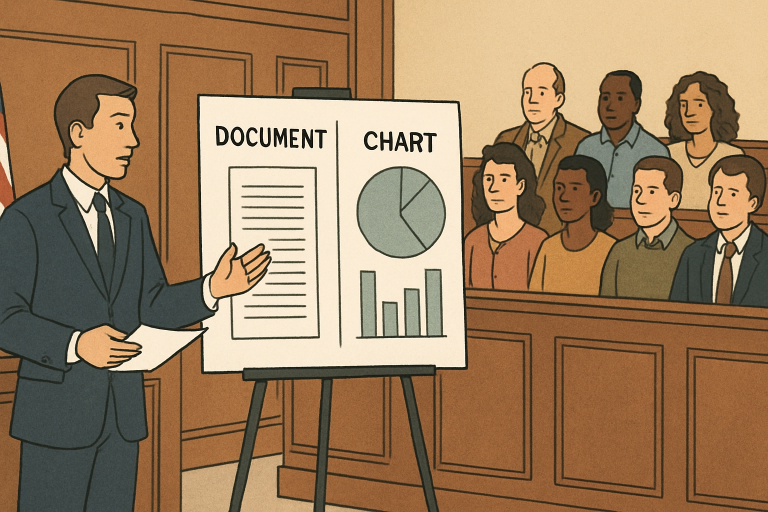
Clarity in communication is equally vital. Banking and finance are fields filled with dense jargon, regulatory acronyms, and complex methodologies that can overwhelm those unfamiliar with the details. A qualified expert must be able to translate this complexity into clear, easily understood testimony. This involves not just simplifying language, but also providing context—explaining industry standards, why certain practices exist, and how they relate to the issues being litigated. Successful expert witnesses use illustrative analogies and practical examples to make seemingly abstract concepts tangible for judges and jurors. This means explaining not only what the evidence shows, but also how it fits within industry practice—ensuring even laypersons on a jury can grasp the significance. Ultimately, effective communication defines whether an expert’s testimony enlightens or confuses the court, and poor communication can render even the strongest expert opinion ineffective. The goal is to educate and guide, ensuring no pertinent detail is lost in translation or overlooked due to complexity.
Adherence to Ethical Standards
Ethical standards also play a pivotal role in establishing credibility. One critical aspect is the fee structure. Experts should avoid contingency-based fees, which tie their compensation to the outcome of the case, a practice that risks compromising impartiality. Transparent and reasonable fee structures minimize the perception of bias and enhance the witness’s reputation for integrity. Additionally, full disclosure of any prior work with the parties involved in the litigation can stave off allegations of impropriety, assuring the court that the expert’s conclusions are drawn from evidence rather than prior relationships or hidden motives. According to the American Bar Association, ethical lapses have led to expert testimony being excluded on numerous occasions, emphasizing the importance of uncompromising standards. A banking expert who demonstrates unwavering ethics not only strengthens their own testimony but also upholds the integrity of the judicial process.
Understanding Legal Standards
Expert testimony exists within a legal framework designed to guard against unreliable findings. Familiarity with these rules, especially the Federal Rule of Evidence 702, is mandatory. This rule requires that expert opinion rest on reliable principles and methodologies, not merely on the witness’s experience. Recent amendments enacted in 2023 clarified that courts must rigorously assess whether the proposed testimony is both relevant and reliable before admitting it. For banking experts, this means consistently updating their understanding of legal requirements and being prepared to defend the validity of their methods and conclusions under direct examination and cross-examination. An expert who stays informed about case law, judicial expectations, and best practices in presenting technical evidence is more likely to survive legal challenges to their qualifications or methodologies and provide testimony that will actually be heard and considered by the court.
Conclusion
The testimony of banking expert witnesses can tip the scales in financial litigation. By prioritizing experience, objectivity, communication, strict ethical standards, and mastery of legal requirements, these professionals offer courts crucial guidance in complex cases. Their role is not simply to advocate, but to educate, clarify, and provide a foundation for fair judicial decisions in banking and finance disputes. In a fast-evolving financial and legal environment, the value of a truly credible expert witness cannot be understated.