Beautiful, vibrant lawns shouldn’t come at the expense of the planet. Homeowners today can cultivate lush, green yards by embracing methods that conserve natural resources and enhance the local habitat. Whether you’re trying to reduce your environmental footprint or simply make your yard more resilient, sustainable lawn practices offer straightforward solutions for eco-conscious property care. If you’re unsure where to begin, consider starting with expert landscaping services Fairfax Station, VA—they can help tailor a plan for your specific yard and region.
Sustainable lawn care isn’t just about reducing your use of chemicals or water—it’s about making choices that benefit your lawn, your family, and your community for years to come. By adopting a few simple changes, you can reduce maintenance time and save money, all while creating a beautiful outdoor space that provides food and shelter for pollinators, birds, and beneficial insects.
Eco-friendly techniques not only improve soil health and lawn appearance but also support broader environmental efforts. Conscientious landscape design moves away from the “perfect” monoculture lawn and embraces diversity, resilience, and resource conservation. These practices make your yard more self-sufficient and better able to withstand pests, diseases, and drought.
Choose Native Plants
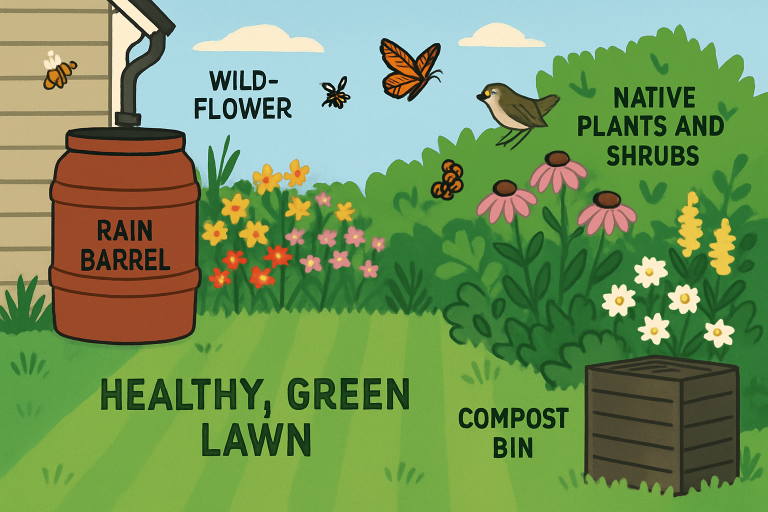
Native plants are adapted to local climate extremes and soil conditions, requiring much less water and fertilizer compared to exotic ornamentals or turfgrass. By selecting indigenous grasses, perennials, and shrubs, homeowners can establish landscapes that thrive with minimal upkeep. In addition to being cost-efficient, native plants attract pollinators like bees, butterflies, and birds, making your yard a haven for wildlife and supporting essential ecological relationships. Landowners who prioritize native species will find their landscapes more durable against seasonal extremes and pest pressures.
Reduce Lawn Size
Large expanses of traditional turfgrass are expensive to maintain, consume significant resources, and provide little ecological value. By shrinking the lawn in your yard and replacing it with planting beds, ground covers, or meadows, you can dramatically reduce your water, fertilizer, and pesticide inputs. Alternatives like clover, creeping thyme, or native sedges are not only more sustainable, but also provide seasonal color, texture, and interest. Converting even small lawn areas to garden beds or naturalized spaces supports increased biodiversity and helps to break up the monoculture that dominates many suburban communities.
Conserve Water
Water conservation is central to sustainable lawn care. The majority of American residential water use goes to landscape irrigation, but this can be minimized by watering early in the morning or late in the day to avoid evaporation, utilizing drip irrigation for efficiency, and choosing drought-resistant species. Letting soil dry slightly between waterings encourages roots to grow deeper and become more drought-resistant over time. Collecting rainwater in barrels is another simple step for eco-friendly irrigation. The U.S. Environmental Protection Agency offers more actionable advice for reducing water usage at home. Mulching around plants also helps retain soil moisture and reduces the frequency of watering. Additionally, regular maintenance of sprinklers and hoses prevents leaks that can waste significant amounts of water.
Use Organic Fertilizers
Unlike synthetic products, organic fertilizers and compost release nutrients gradually, reducing the risk of runoff and water pollution. They improve the structure and fertility of your soil, fostering robust grass and plant growth without synthetic chemicals. Incorporating compost or natural soil amendments supports the beneficial microbes that help plants access nutrients, bolstering both your lawn’s vitality and the resilience of your landscape. This not only reduces long-term maintenance needs but also helps your yard recover quickly from periods of drought or heavy rainfall.
Adopt Smart Mowing Practices
Setting your mower to a higher cutting height lets the blades grow deeper roots and retain moisture more effectively, discouraging weeds and fostering thicker turf. Grasscycling, or leaving your grass clippings on the lawn, is a simple way to return nitrogen and other nutrients to your soil, reducing fertilizer needs. Alternating your mowing pattern can also prevent soil compaction and create stronger, healthier turf.
Integrate Smart Technology
Recent innovations in landscape technology enable homeowners to save resources while maintaining beautiful outdoor spaces. Smart irrigation systems monitor weather conditions in real time and automatically adjust watering schedules to minimize waste. Solar- or battery-powered robotic mowers provide efficient, emissions-free maintenance, and many can be programmed to avoid disturbed areas or wildflower patches, further supporting your garden’s biodiversity. Even simple gadgets, like soil moisture sensors, can take the guesswork out of lawn care and reduce overwatering.
Avoid Chemical Pesticides
Synthetic pesticides not only threaten beneficial insects, such as pollinators and decomposers, but can also end up in runoff that pollutes waterways and disrupts natural cycles. Integrated pest management (IPM) involves cultivating pest-resistant plants, encouraging natural predators, and using organic deterrents like neem oil or insecticidal soap only when needed. These strategies maintain lawn health without harming the environment, your family, or your pets.
Leave the Leaves
Compost your leaves by leaving them on your property rather than raking and disposing of them. As leaves break down, they create a nourishing mulch that enriches soil, suppresses weeds, and supports a healthy micro-ecosystem. Leaf litter also offers vital habitat for insects, overwintering pollinators, and soil health. Whenever possible, shred leaves with a mower so they decompose more quickly and don’t smother your grass.
Adopting sustainable lawn care isn’t just suitable for your yard—it’s a contribution to a healthier environment for everyone. With mindful practices and the right resources, your landscape can thrive, conserve valuable resources, and support local wildlife for years to come.