Key Takeaways
- Double-pane glass improves comfort, energy efficiency, and noise reduction.
- Overall window performance depends on the complete system, including frames, coatings, seals, and proper installation.
- Choosing a high-quality window system helps maintain year-round indoor comfort.
Windows do more than provide daylight and a view. They influence how warm, cool, quiet, and comfortable each room feels throughout the year. For homeowners dealing with fogged glass, cold spots, or changing indoor temperatures, double pane window repair Nassau Bay, TX can be an important part of restoring window performance and everyday comfort.
Double-pane glass is especially valuable because it addresses several comfort concerns at once. It can slow heat transfer, make indoor glass surfaces feel less extreme, reduce some outside noise, and help rooms with large windows feel more balanced in both winter and summer.
What Is Double-Pane Glass?
Double-pane glass, also called insulated glass, uses two panes of glass sealed together with a space between them. That enclosed space creates an insulating barrier that performs far better than the single sheet of glass found in many older windows. Still, the glass alone is not the entire story. Frame condition, weatherstripping, seals, hardware, and installation quality all affect the finished window’s performance.
How The Glass System Works
Heat naturally moves from warmer areas toward cooler ones. The sealed space between two panes slows that movement, helping retain indoor heat during cold weather and limit unwanted outdoor heat during hot weather. The U-factor describes how readily a whole window transfers heat, while the solar heat gain coefficient, or SHGC, indicates how much solar heat passes through. Air leakage measures the amount of air that moves around operable parts of the window.
The U.S. Department of Energy’s window technology guidance notes that glazing, gas fills, spacers, frame materials, and window operation all influence performance. In practical terms, a high-performing glass unit needs a sound frame and a careful installation to deliver its intended benefits.
How Double-Pane Glass Helps In Winter
Single-pane windows often develop very cold interior surfaces in winter. Even without a noticeable air leak, sitting near that cold glass can feel uncomfortable because your body loses heat toward it. Double-pane glass helps keep the interior pane warmer, reducing the cold-zone effect around windows.
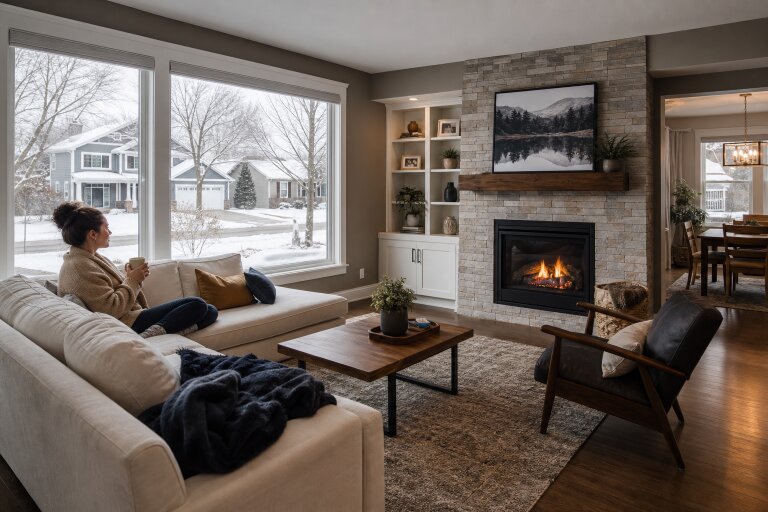
That can make a meaningful difference in rooms where a chair, dining table, or home-office desk sits near a window. Instead of avoiding one cold corner of the room or constantly raising the thermostat, occupants may experience steadier temperatures and more usable space.
How Double-Pane Glass Helps In Summer
In summer, sunlight can add significant heat to rooms, particularly those with broad west- or south-facing glass areas. Double-pane glass can reduce that heat transfer, but SHGC is especially important. A lower SHGC generally limits solar heat gain, which may help sun-facing rooms feel less stuffy and reduce strain on cooling equipment.
The best choice depends on climate, home design, window direction, exterior shading, and how each room is used. A bright living room may need different glass performance than a shaded bedroom or a frequently used home office.
Fewer Drafts And Less Condensation
A draft is moving air entering through gaps in the frame, sash, or surrounding opening. A cold feeling near the glass may instead be due to poor insulation. Double-pane units can reduce cold surfaces, while weatherstripping, caulk, and proper installation address air leakage.
Condensation can still form on the room-side glass when indoor humidity is high and outdoor conditions are cold. However, fogging or moisture between the panes often indicates a failed seal. Other warning signs include water marks around the frame, visible seal damage, or persistently cold areas after weatherstripping has been checked.
Noise Control And A Quieter Home
Two panes of glass and an enclosed airspace can soften some outdoor sound, making double-pane windows useful near traffic, schools, commercial areas, or other busy locations. Standard double-pane glass is not a complete soundproofing solution, however. Pane thickness, spacing, laminated glass, frame construction, and tight installation can all make a substantial difference.
Bedrooms facing a road and workspaces where concentration matters may benefit from a window design selected specifically for noise control rather than relying on a basic insulated unit alone.
The Role Of Low-E Coatings And Argon Gas
Low-emissivity, or low-E, coatings are thin, nearly invisible layers that help manage radiant heat while still allowing natural light through. Argon is an inert gas commonly placed between panes to improve insulation compared with ordinary air. Both features can improve comfort, but neither replaces a durable seal, quality frame, or proper installation.
ENERGY STAR window guidance recommends considering climate-zone requirements and verified performance ratings when comparing residential windows. A basic double-pane unit can be an improvement over older glass, while low-E coatings and gas fills may provide better control of winter heat loss and summer heat gain.
What To Check Before Choosing New Windows
- Climate and exposure: Consider local heating and cooling demands, shade, and window direction.
- U-factor: Lower values generally mean better resistance to heat flow.
- SHGC: Match solar heat gain control to the amount of direct sun the room receives.
- Air leakage: Lower ratings can help reduce drafts around operable windows.
- Frame and seals: Look for durable materials, intact seals, and well-designed drainage.
- Installation: Gaps around the opening can undermine even excellent glass.
Simple Maintenance Steps
Clean the glass with a soft cloth and a suitable cleaner, inspect the caulk and weatherstripping once or twice a year, and keep drainage openings clear. Check for moisture between panes, lubricate moving hardware when the manufacturer recommends it, and address small frame or seal problems early. Avoid blocking heating and cooling vents with heavy curtains or furniture, since airflow also affects comfort near windows.
Frequently Asked Questions
Does Double-Pane Glass Make A Home Warmer?
It can help reduce heat loss and keep the glass inside warmer than older single-pane windows, improving comfort near the window.
Does It Keep Rooms Cooler?
It can, especially when the glass has an appropriate low-E coating and SHGC for the home’s sun exposure and climate.
Can Double-Pane Windows Reduce Outside Noise?
They can reduce some noise, but laminated glass, uneven pane thicknesses, strong seals, and careful installation may further improve results.
Why Is There Moisture Between The Panes?
Moisture between panes commonly signals seal failure. Surface condensation usually relates to humidity, temperature, or ventilation.
Are Low-E Coatings Worth Considering?
They can improve heat control while preserving useful daylight, making them worth considering for many homes.
How Long Do Double-Pane Windows Last?
Lifespan varies with glass quality, frame material, sun exposure, seal durability, maintenance, and installation quality.
Should Every Window Use The Same Glass?
Not always. Rooms may have different needs for sunlight control, privacy, ventilation, noise reduction, and insulation.
Final Thoughts
Double-pane glass affects more than energy use. It can reduce cold spots, limit unwanted summer heat, soften outdoor noise, and make rooms feel more consistently comfortable year-round. The strongest results come from treating the glass, coatings, frame, seals, and installation as one complete window system.